Showing posts with label Nanoknife. Show all posts

Wednesday, November 16, 2016

Cancer Patients Survival Is The Hard Truth

We all know cancer is like a disaster for a person even for a whole family, especially for terminal cancer. Many of netizen will introduce their finding of natural herbal medicine to treat cancer, but to tell the true, most of natural herbal medicine just in help for cancer the same as to Chinese traditional medicine, so when the herbal is used to treat cancer? And what kind of treatments do you think are effective to advanced cancer patients. Here let me tell you the true.

Tell The True

At present, medium and advanced cancer are hard to be crued, they just can be treated well to prolong the patients’life, well, it is not a absolute, it may be also a change to be cured, but i wonder how do you define “cure” of cancer? what kind of extent do you think is “cure”? First, we need to turn to several ways to explain it:

For different patients caused different cancers, some of them are on early or medium stage, some of them are suffering from advanced cancer, early stage can be easier cured by surgery or ordinary treatment like chemo or radiation though there is much side effect and pain, but medium and advanced cancer are a hard nut to crack, because the cancer cells have attached and invaded to your large tissue, it is a terrible situation, well, that required most complicated treatments and surgery to kill the cancer cell. Let us make a assumption, if you have an advanced cancer and you did find the good doctors and treatments you think, the doctor said your cancer can be cured or you can live 5-10 years, well, i think the doctor tell the true, but i think there is a precondition, that you need to control well your survival cancer cell or your health well after the treatments or surgery, especially for the tumor exist in internal organs. You know if you can not treat well your body, for example, stay up late, excessive drinking, eat much junk food, obesity... the cancer will be recurrent and metastatic easily, even though you have vary healthy lifestyle it is also hard to say that you don’t have cancer, it may be other rare reasons like genes or bacterial infection. So that is what we really need to think about how to define “cure” of cancer, in other words, “cure” is to let cancer patients live longer and longer untill the natural end the life.

 So, How To Live Longer And Improve The High Quality Of Life.

If you want to live longer and longer, we need to find the right hospital, doctors and treatments first, and then choose one hospital you think is good for you among most of hospitals. Here i can recommed the Fuda Cancer Hospital how to prolong the patients’ life and improve their quality of life.

In general, chemo or radiation are common used cancer treatments, but it may caused much side effect and pain, other options in Fuda including: Cryosurgey, Nanoknife, Immunotherapy, Vascular Interventional Therapy, Photodynamic Therapy (PDT),T-plus Immunotherapy for Malignancies, Anti-angiogenesis Therapy, Chinese Traditional Medicine..., the most popular and famous are “3C+P” treatment model and Nanoknife in Fuda hospital. All above of them have little side effect and pain. 3C: Cryosurgical Ablation (cryosurgery), Combined Cancer Immunotherapy, Cancer Microvascular Intervention, P: Personalized Therapy which treat according to the patients personal body condition. For example, patients who do not want or are not suitable to take operation, radiotherapy and chemotherapy. Or patients who got poor efficacy after taking traditional operation, chemotherapy and radiotherapy. The Fuda doctors and experts will improve the patients’ nutrition and immunity first, then do the surgery, which can decrease the risk of surgery and ensure the patients safety.


“3C+P” treatment model aim at treating the medium and advanced terminal cancer, as to prolong their life and improve their high quality of life, the quality of life mean that the patients live without pain with little cancer survival cell which is fall into sleep after accepting treatments, and won’t “wake up” won’t attack your tissue. But you want to be “cure” don’t let your unhealthy lifestyle to wake up the cancer cells because cancer cells are changed from normal cells under a terrible body condiction. That is why required the cancer patients to do a regular examiation to prevent the cancer recurrent and metastasis.

So, the “cure” is to keep your body in a sercurity environment and condition i think, most of Fuda cancer survivors have lived over 8-10 years, some are longer. Another important point is to know well how to prevent cancer recurrence and metastasis.

How To Choose Hospital And Experts.

The best suggestion is to know well hospital and experts you find, then to make your final decision in case of any faker happen around you.

1. To see the hospital whether accredited by JCI or have other authoritative international approval.

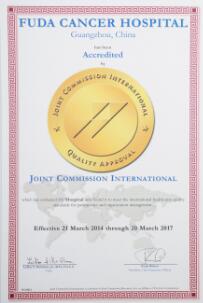
Fuda Cancer Hospital have been accredited by JCI (Joint Commission International), and which is one of sponsors of ISC ( International Society of Cryosurgery). The combined treatment model have beed approved by NCCN.
ISC
JCI


NCCN
2. How To Know The Doctors And Experts Skill.

First, to see the their qualification, honor and award, then review their experience on clinical surgery. For Example, Fuda president and doctor Xu Kecheng, vice president and doctor Niu Lizhi.

Fuda president and doctor Xu Kecheng:

President of 17th International Society of Cryosurgery
He was awarded the highest honor - "Bethune Medal" in 2012 for his excellent work and contributions to China's national healthcare system.

Vice President and doctor Niu Lizhi:


Another is to know the professional team
3. Read The Patients Stories To Know More Detail
4. Consult The people who know Fuda Cancer Hospital around you.
5. To See The Media Report And News On TV


Saturday, September 17, 2016

FUDA Completed 100 Cases of NanoKnife (IRE), The Number of Which Ranks the First in Mainland China

In the morning of March 16, 2016, Guangzhou Fuda Cancer Hospital held a press conference, announcing that FUDA has completed 100 cases of NanoKnife, the number of which ranks the first in mainland China. Journalists from over ten media, including Xinhua News Agency, China News, Yangcheng Evening News, Nanfang Daily, Guangdong TV witnessed the moment. Two patients, Ms. Lu Mingying, winner of Rank Prize in England and Ms. Gregerson Gurli, a teacher from Denmark, who have gained benefits from Nanoknife  shared with the journalists their anti-cancer experience at the press conference.
Prof. Niu Lizhi, President of FUDA, announced that Guangzhou Fuda Cancer Hospital has completed 100 cases of NanoKnife

A memorable moment

At 1:30 p.m., March 8, 2016, Prof. Niu Lizhi, President of Guangzhou Fuda Cancer Hospital walked into the operation room in the dark green surgical gown to perform one case of NanoKnife.
It was a memorable moment as it marks the 100th case of NanoKnife that Guangzhou Fuda Cancer Hospital has done. The patient lying on the operating table was Ms. Gregerson Gurli, a 68-year-old retired teacher from Denmark--a legendary woman. In 2007, she was diagnosed with pancreatic cancer with liver metastases. Her doctor in Denmark said she only had two to three months to live. As she found no other good treatment in several European hospitals, she came to Guangzhou Fuda Cancer Hospital for treatment in February 2008. Gurli has undergone cryoablation, iodine seeds implantation therapy and other comprehensive treatments at FUDA from 2008 till now. Despite that cancers are still present in her body, she has survived for over 8 years since diagnosis. It is the concept of living with cancer that has rendered her a prolonged life. 

Prof. Niu noted that the 100th case of NanoKnife was done on liver tumors. “Recently, Ms. Gurli has been found to have multiple neuroendocrine tumors in liver. There are three tumors detected, the largest is about 5cm in size and the other two are about 4cm and 2cm in size respectively. Considering that the masses are big in size and are close to important structures as hepatic diaphragm dome and hepatic hilus, NanoKnife therapy will be able to deliver higher safety and less side effects. ”

All was ready and the treatment got started. The medical team led by Prof. Niu performed ablation on the biggest mass first. The mass was located at the S7 of liver and had high activity. Under the guidance of ultrasound and CT scan, Prof. Niu punctured the two NanoKnife probes into the base of tumor for ablation. Then the probes were relocated to ablate the other two masses. The screen clearly showed that the masses became necrosis and gasification after ablation; small bubbles were formed; the previous high-density echo became lower...Prof. Niu was satisfied with the ablation result. He noted, “As NanoKnife is a highly secure and mini-invasive treatment, the multiple masses in liver can be ablated at one time. Today, three masses in her liver have been ablated. The procedure went smoothly.”Five great leaps achieved by FUDA in the research on and clinical application of NanoKnife. 

At the press conference, Prof. Niu Lizhi introduced to the reporters that NanoKnife is currently the latest cutting-edge ablation technology for tumor in the world. During the procedure, high electric-field and ultra-short pulses are given to destroy lipid bilayer structure of cancer cell membrane and form numerous irreversible nano-sized pores in the cell membrane. Cell membrane permeability will be changed to allow molecules of different sizes free access to cells, which will lead to cell death. NanoKnife has been approved by America FDA in April, 2012 and has been certified to CE certification of EU. In June 2015, NanoKnife was approved by Chinese FDA for clinical application. Guangzhou Fuda Cancer Hospital has been five No. 1 in terms of the research on and clinical application of NanoKnife.

1. FUDA is the first cancer hospital in mainland China to have introduced NanoKnife.
 
2. As early as in August 2014, Xu Kecheng and Niu Lizhi compiled and published New Technique of Cancer Ablation Irreversible Electroporation--the first monograph on NanoKnife in China.
 
3. On July 2, 2015, the first case of NanoKnife in mainland China was completed at FUDA. The patient was a 61-year-old pancreatic cancer patient from a Middle East country.
 
4. As of March 8, 2016, 100 cases of NanoKnife have been done for patients with advanced pancreatic cancer, liver cancer etc. It has ablated the lesions and improved the quality of life for cancer patients. The cases of NanoKnife that has been done at FUDA rank the first in mainland China.
 
5. The number of papers on NanoKnife published on authoritative magazines, including Journal of Interventional Radiology and Chinese Journal of Radiology, etc. ranks the first in China.
 
Prof. Niu Lizhi noted, “NanoKnife can achieve complete ablation on small tumors and control and shrink big tumors. Looking back on the 100 cases of NanoKnife we have done, we found that NanoKnife has been delivering good curative effect for pancreatic cancer and liver cancer patients. The remission rate exceeds 80%, approaching the world level. With the development of the technology and the accumulation of experience, I’m convinced that NanoKnife will bring benefits to more cancer patients.”

Sunday, August 14, 2016

Laureate of Rank Prize Ms.Lu from Britain with Advanced Liver Cancer survive after Nanoknife

On March 24, 2016, Ms. Lu Mingying, a renowned scientist and Rank Prize laureate was discharged from hospital after receiving comprehensive treatment at Fuda Cancer Hospital for two months. One day before discharge, she put on her scarf and, to express her joy and appreciation, she said good-bye to doctors and nurses who had been taking care of her express “It is the doctors at FUDA that have saved me from the verge of death.” 
     Xu Kecheng, Chief President of Fuda Cancer Hospital and Ms. Lu Mingying
                   Ms. Lu Mingying and nurses of the 4th ward

One week before her discharge, we visited her. During the interview, she worn the same red scarf. “This is a present from a friend of mine cause wearing red makes me look more radiant.” She felt much betteras she just stooped her oral chemotherapy medicine on that day. She shared with us her experience of studying in UK, her Rank Prize winning stories and her journey of fighting against cancer. 

The influence of her father

Lu Mingying was born in a scholarly family in 1954. Her father Lu Zhongzuo, the founder of vacuum electronic devices major in China, had long engaged in the research of microwave tube and wrote the first batch of textbooks and monographs on microwave electronics in China. “Being raised in such an environment, I developed a keen interest in mathematics, physics and optoelectronics since I was a little child.”she said. Unfortunately, she had to suspend her schooling as the Great Cultural Revolution broke out when she was just enrolled into middle school.Two years later, she resumed her schooling in a nearby middle school. In 1970, Lu Mingying, who just turned to 16, was assigned to a small factory and worked there for seven years.

Lu Mingqi, Lu Ming’s elder sister, noted, “Before the college entrance examination system was resumed in China, my sister had never quit learning. She worked during the day and studied at night”. It was with her persistence that she made her way into the Department of Electronic Engineering of Nanjing Institute of Technology (currently Southeast University) in 1977.
                 Lu Mingying (R) and her elder sister Lu Mingqi

In university, Lu Mingying met her life partner - Wang Guoyu, her classmate. In her memory, they spent most of time doing research in the lab instead of going dating. Upon graduation from university, Lu Mingying was accepted into the postgraduate program of Southeast University while Wang Guoyu was accepted into the postgraduate program of Tsinghua University. They got married after finished their master degree. In 1984, they had their fist child. Later, Lu Mingying served as a lecturer in Southeast University while her husband also chose to work as lecturer in the same university.

Studying in England

In the end of 1980s, digital camera was very expensive and it cost thousands of dollars to buy one. The main reason was that the imaging sensor of digital camera was very costly. Even researchers in Japan, Europe and America were not able to tackle the difficult problem.

Wang Guoyu and Lu Mingying, who were then studied in the University of Edinburgh, were enrolled into an experimental group in 1987 and 1989 respectively. They joined two professors of the University of Edinburgh with a clear purpose, that was to develop new imaging sensors. They put forward a bold proposal, which was whether common semiconductor integrated circuit can be applied to imaging sensor as it can greatly reduce the cost of imaging sensor.

After years of unremitting efforts, they successfully applied common semiconductor integrated circuit into imaging sensor. The technological innovation has brought about great changes. The cost of imaging sensor reduced by one third; imaging sensor can be mass produced; the price of digital camera fell from several thousands dollars to around 10 USD. In 2002, the technology began to be applied to Nokia mobile phones and widely has been applied to 
mobile phones since then. Mobile phone photographing has become an easy thing. It has turned from a luxury to popular consumable goods. “The 50million chips for mobile phone photographing produced every day are using our technology.” Lu Mingying said proudly. 

A surprising award

The application of common semiconductor integrated circuit in imaging sensors is an epoch-making shift in the industry of digital camera. The four researchers including Lu Mingying were awarded the Rank Prize in 2008.

Established in 1972, the Rank Prize is one of the top science awards in England in recognition of researchers who have made tremendous contribution to the fields of optoelectronic science and nutriology. It is reputed as the Nobel Prize in the fields of optoelectronic science and nutriology. As of now, only a few Chinese, including Charles Kao, the Father of Fiber Optic Communications and Yuan Longping, the Father of Hybrid Rice, have won the Rank Prize. 

“It’s really surprising”, Lu Mingying said when she delivered her acceptance speech. It turned out that in March 2007, Lu Mingying received a letter, asking if she would like to participate in the selection of the Rank Prize. “The scientific research achievement was made over 10 years ago. We almost forget about it.” The couple felt that it must be someone who was playing tricks with them so they did not pay any attention to it. Shortly after that, Lu Mingying received a letter from her previous supervisor, asking if she had received an invitation letter for the selection of the Rank Prize. It was until then did the couplerealized that it was not a trick.

”I was so surprised and excited”, said Lu Mingying. They had invested so much time and efforts in order to overcome the technical difficulty. It was really a surprise for them to finally get the recognition after over 10 years. 

Facing up to the devil of cancer

In December, 2015, Lu Mingying started to feeling unwell and often had lower abdomen pain. She had thought it was just urinary system infection and took a lot of antibiotics but the symptoms showed no remission. In December, she come to China for an academic conference. Her husband insisted that she should do a  physical examination. Ultrasound result showed that there was a tumor sizing 7x8cm in liver. The doctor said that she was at advanced stage and an immediate CT scan was suggested. Further examinations proved that she was suffering from cholangiocarcinoma with metastases in bones, lymph nodes and abdominal cavity.

“It was the first time I’ve heard of this term and I had no idea what it is exactly. I searched on the Internet and learned that cholangiocarcinoma cannot be easily treated.” In the face of the unexpected disease, Lu Mingying did nor show extreme sadness and despair as other cancer patients. She did not She was so emotionally peaceful when she was telling us her story.

Some doctors suggested her to do radiotherapy and chemotherapy first but she declined. She kept on looking for new and mini-invasive treatments on the internet. One day, she accidentally read a piece of news, saying that cholangiocarcinoma can be treated with NanoKnife. “I saw a light of hope after I read the news”. At first, she chose to go back to England for treatment. She consulted a renowned Nanoknife specialist from the Medical School of Imperial College London. However, it would take long time waiting for NanoKnife in England. She chose to go back to China for NanoKnife for fear that her condition would progress.  

Getting to know FUDA by virtue of NanoKnife

Lu Mingying set her mind on the new technology of NanoKnife. She searched about NanoKnife on the Internet and finally traced down to Guangzhou Fuda Cancer Hospital. After learned that FUDA had completed over 70 cases of NanoKnife, she decided to come to Guangzhou Fuda Cancer Hospital for treatment. 

Her sister said, “Before we come to FUDA, I went all the way to a major hospital in Xi’an cause I read from a newspaper that the hospital has completed successful cases of NanoKnife. I even consulted a specialist about my sister’s case but the specialist said the tumor was too big to be ablated. ”

In January 13, 2016, Lu Mingying was admitted into Fuda Cancer Hospital. Due to rapid disease progression, she was too weak to walk upon admission and she had ascites and fever. “From the first day that I was admitted into the hospital, I have had the feeling that it was right for me to choose FUDA. All medical staffs, from the president to doctors and nurses have been very nice to me. On the second day of my admission, Xu Kecheng, the Chief President of FUDA, Niu Lizhi, the Executive President of FUDA and other experts made rounds and they gave me a lot of encouragement. I felt assured. I’mconvinced that I could entrust my life to FUDA. If FUDA cannot do any treatment for me, I won’t be treated in anywhere else.”

In the following days, Lu Mingying received comprehensive treatments, including photodynamic therapy, NanoKnife, iodine seeds implantation therapy, etc. “It is the doctors at FUDA that have saved me from the verge of death.” Lu Mingying said.

After two months’ treatments, she has built up more and more confidence in FUDA. Where does the confidence come from? First of all, it comes from the excellent skills of the doctors. They have been very patient in explaining to me the upcoming treatment and I’m very clear about the possible side effects; secondly, it comes from the “green therapy” offered by FUDA. The green therapy, or minimally invasive treatment, has inflicted no pain, which accords 
with my concept of treatment; thirdly, the confidence comes from the humanitarian service provided by FUDA. Doctors, nurses and cleaners always greet patients with smile. I have been feeling very comfortable for the last two months.

“One of my supervisors died of brain cancer. I thought how nice it would be if he had been treated at FUDA. That’s why I want to share my treatment experience and feelings with other patients so that more patients can get to know FUDA and gain survival benefits here. ”